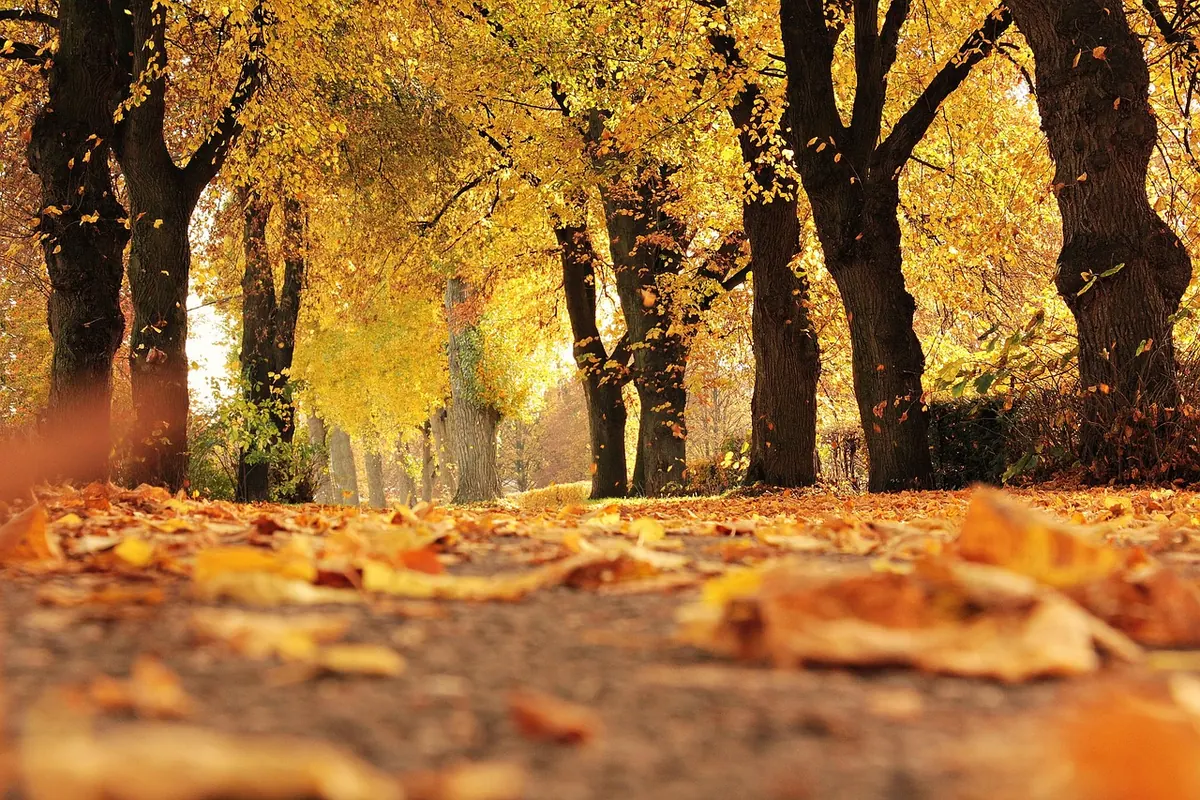
There's a particular week in late September when the UK tips into autumn. The mornings turn sharp, the light is gold by four, and everyone starts talking about conkers again. It's a generous season for writers: the weather gives you an excuse to stay in, and the world outside gives you more material than you can use. The trick is to start small and specific — a smell, a ritual, a particular Tuesday. The twenty prompts below are built for that.
How to Use These Prompts
Pick one, set a timer for twenty minutes, and don't edit. Most of what you write will be rubbish; that's the arrangement, not a failure. Keep a notebook or a notes app open, and if a prompt produces something with legs, come back to it the next day rather than pushing on until it goes flat.
- Twenty minutes, no editing, no going back.
- Write by hand if you stall on a screen.
- Date everything, so you can find it again in February.
- Let two or three prompts collide if they want to.
If a prompt doesn't fit your life, change it. Swap the village church for a mosque, the lane for a towpath, the grandfather for an aunt.
Weather, Light and the Clock Change
- The first cold morning. Begin with the cold before anything else — a radiator clicking on, a breath visible at the bus stop, a coat that smells of last winter.
- Golden hour at half four. Set a whole scene in the thirty minutes before the light goes. Nothing dramatic happens. Make it worth reading anyway.
- Rain against the windscreen. Two people in a parked car, engine off, waiting it out. What do they say that they wouldn't say indoors?
- The clocks go back. An extra hour, spent badly by one character and well by another. Write the same hour twice.
- Fog on a familiar route. Describe your usual walk to the shops in fog, then again in clear light. Same streets, same person, different mood.
Festivals and Traditions
- Bonfire Night from a distance. You're watching the fireworks from a hill, a bus, or a hospital window. Write what you hear before what you see.
- A Halloween costume, aged nine. Made from whatever was in the house — a sheet, a bin bag, a borrowed hat. Write about the child who wanted to be something else entirely.
- Diwali in a shared house. Someone is far from home and marking it with neighbours, or not marking it at all. Use food, light and noise; skip the sentiment.
- Harvest Festival at the village church. Marrows on the windowsill, tinned goods in a cardboard box. Write the sermon nobody is listening to.
- Apple Day. A borrowed press, a crate of windfalls, an argument about which variety is which. Write the argument first and the recipe second.
Landscape and Place
- Blackberry picking along a lane. The scratches, the stained fingers, the good patch somebody else got to first. Write it as a memory told years later.
- A walk you know too well. Choose a route near your home. Write it in second person, present tense, as a set of instructions.
- The last day of the season at the seaside. Empty arcades, shut cafés, one shop still open. Who is still there, and what are they waiting for?
- Woods after rain. Use only smell, sound and touch. No visual description at all — not one colour, not one shape.
- An exposed hill in bad weather. The Peak District, the moors, a headland on the coast path. Someone is underdressed for it. Follow what happens next.
Memory, Family and the Domestic
- A jumper that belonged to someone else. Tell the story of the garment rather than the person who wore it. Where has it been?
- First frost and the greenhouse. A grandfather, a paraffin heater, a glut of green tomatoes. Keep to the practical details and let the feeling arrive on its own.
- A recipe passed down badly. Measurements like "a cup" and "until it looks about right". Write a scene in which two people disagree about what that means.
- Coming home in the dark. A child or an adult arriving back after the streetlights are on. What is waiting inside, and who put it there?
- A photograph from a previous October. Describe only what is in the frame. Then write what happened five minutes afterwards.
Turning a Prompt into a Finished Piece
Prompts generate material; they don't finish anything. When you read back over a twenty-minute sprint, look for the one line that surprises you. That is usually your opening, and everything else can be reordered around it. Then ask what your character wants in the next ten minutes — not from their life, just the next ten minutes — and you'll usually find a scene rather than a sketch.
Give yourself a deadline. One piece polished and read aloud beats five abandoned in a notebook. Libraries, community centres and local writing groups often run open mic nights and feedback evenings, and reading to three people in a back room is far more useful than waiting until the work is perfect. Pick your best sentence, edit the piece down by a fifth, and read it to somebody before the month is out.
Keeping Going into Winter
Autumn doesn't last, and that's part of its usefulness. Before the season turns, put three unused prompts in the diary for November, December and January. Keep a notebook by the door and jot down the small things as they happen: the first frost on the car, the smell of the coat pocket where the gloves live, the sound of the heating coming on at half six.
Seasonal prompts aren't really an instruction to write about autumn. They're a way of writing from where you actually are, letting the weather and the calendar do some of the work for you. When the season changes, so does the material. Start with one prompt this week, and see where it takes you.
Photo: NoName_13 / Pixabay